
Clock Motors (modernclockmotors)
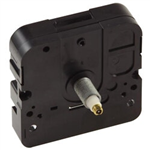
Clock Motors and Obtaining the Most from Them
Clock motors are what regulate the performance of standard wrist watches. Modern clock electric motors ("movements" is the term commonly used in the profession) determine their timing from the variety of pulses emitted by a quartz crystal (at a high and specific resonant frequency) happening over a certain duration; via counting and neighborhood (in software) they can after that obtain instantaneous angles of rotation for every of the hands. Nevertheless, though timekeeping is the most fundamental capability of these devices, they can do a lot a lot more, displaying attributes varying from traditional to exotic to distinctive.
Early clock electric motors worked mechanically. Possible power in the form of coiled springtimes or hanging weights was converted into the kinetic energy of a turning flywheel, the speed of which could be managed with the coordinated mix of pendulum and escapement. By gently readjusting the specifications of this mix (e.g., size of pendulum shaft) the clockmaker was able to attain a consistent tick at the very exact price of one secondly.
In time the mechanical structures were supplanted by digital ones, less strained with troublesome components. Quartz crystals ended up being the power source, sending out pulse trains at progressively accurate frequencies when voltage is applied to them. Pulse counts could be accumulated in digital registers, and software application converted the pulse streams into time pens of hours, mins, and secs.


